Google Ads / PPC / JOURNAL
SEO vs. Google Ads for San Antonio Businesses: Which Comes First?
Choose between SEO, Google Ads or a focused combination. Compare timing, website readiness and cost per qualified inquiry—not clicks alone.
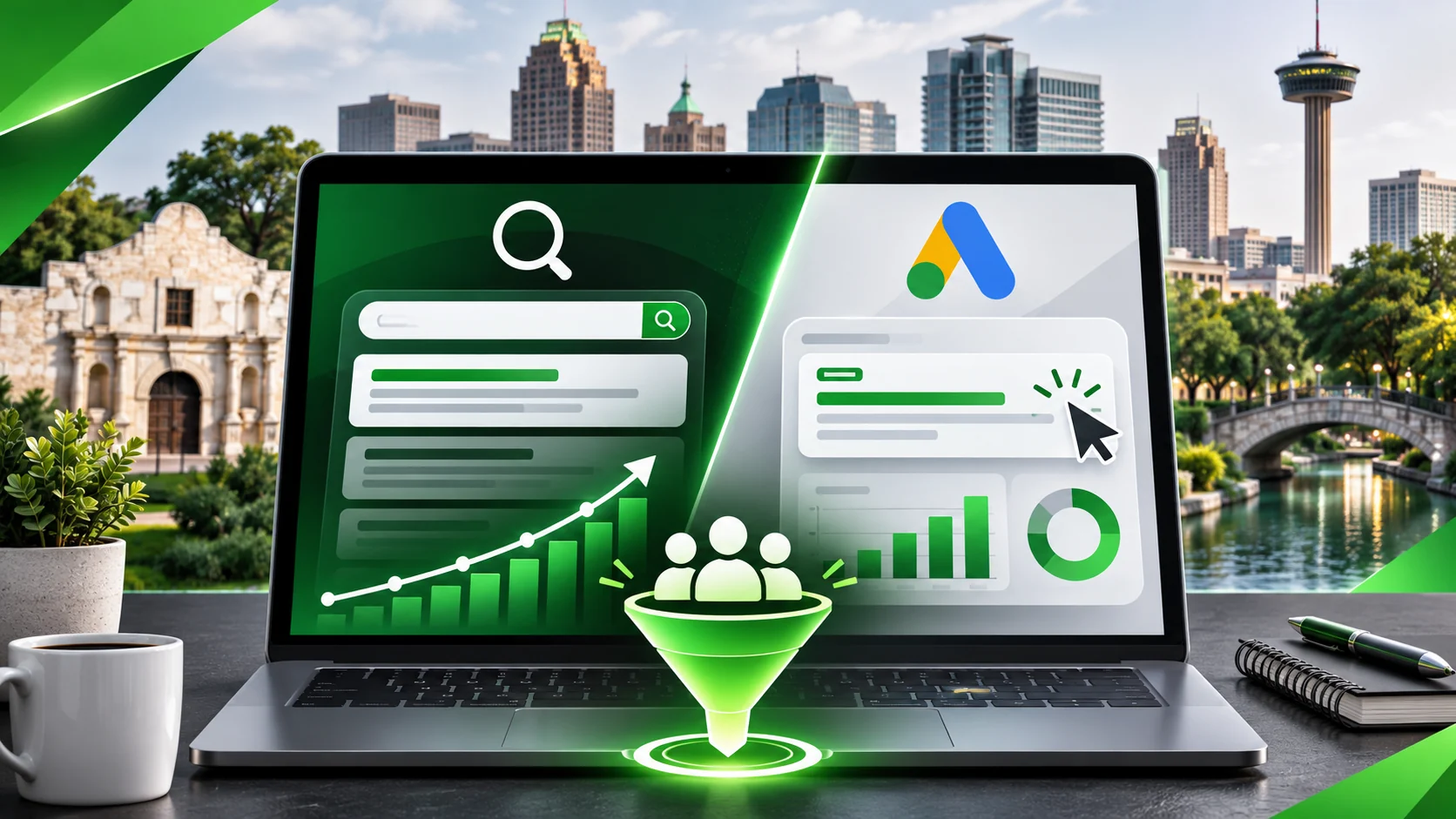
Choose SEO when you need a more useful, findable website and can invest in ongoing improvements. Consider Google Search Ads when you have a clear offer, a working landing page and a budget for a focused test. If visitors cannot understand your service or successfully contact you, fix that foundation first. Neither channel guarantees profitable inquiries.
Substantively updated November 10, 2026. This guide combines our overlapping SEO-versus-paid-search articles. Written by NXT GEN WEB.
SEO vs. Google Search Ads: the practical difference
SEO helps search engines understand useful website content and helps people discover it in unpaid results. Google Ads purchases eligible advertising placements through an auction. Paying for advertisements does not buy a higher organic ranking; Google explains the separation in its paid and organic search guidance.
| Question | SEO | Google Search Ads |
|---|---|---|
| What are you investing in? | Helpful content, technical quality and ongoing improvement | Advertising activity, management and the landing-page experience |
| How quickly can it help? | Timing varies; meaningful changes can take time to evaluate | Eligible ads can serve after setup, but profitable leads are not automatic |
| What can you control? | Your content, site structure, usability and business information | Campaign settings, budgets, bids, messages and destinations |
| What should you measure? | Relevant visibility and qualified inquiries over a suitable period | Qualified inquiries, booked work and acquisition costs |
| What happens when spending pauses? | Useful pages remain, although visibility can change | Paid exposure stops when campaigns stop serving |
Organic clicks do not carry an advertising click charge, but earning them still requires work. Conversely, a paid click is not a guaranteed lead. Google describes bids, quality, competition and search context among the factors in its ad auction.
Which channel should come first?
Prioritize the website and SEO foundation when the basics are weak
If your core services are hard to find, your mobile pages are difficult to use or important customer questions are unanswered, begin there. Dedicated service pages, accurate contact information, descriptive titles and clear internal links can support a better experience for visitors from either channel.
SEO is not a deadline-based promise. Google’s SEO Starter Guide explains that different changes can take very different amounts of time to show an effect. Evaluate the work and relevant results over a reasonable period rather than buying a guaranteed rank.
Consider a focused advertising test when the offer and response process are ready
Search Ads can be useful for testing demand for a specific service. Before launch, define the customer, actual service area, offer, relevant landing page and who will respond to inquiries. Separate media spend from management and website work so the total investment is clear.
A limited budget should not be spread across every service and location at once. Focus on a service the business can deliver and evaluate. Review search terms, location settings, budget pacing and lead quality. Campaign settings do not remove the need for ongoing oversight.
Use both when you can measure them properly
A business can improve its service content while advertisements test a particular offer. Research from one channel may inform the other, but do not assume that combining channels automatically improves profitability. Check whether the business is receiving additional qualified inquiries and customers.
Three illustrative business scenarios
These examples describe possible planning approaches, not verified client results.
An emergency home-service business
A plumber serving Alamo Ranch and nearby communities may want urgent repair inquiries. A focused campaign during hours when the team can respond could be worth testing. The landing page still needs accurate services, coverage and contact options. Ads cannot repair a process that routinely misses calls.
A professional practice
An accounting or consulting practice may need pages that explain services clearly before a prospective client decides to contact it. Helpful service content can support that research. Paid search may test one priority service, with inquiries qualified by the firm’s actual client criteria.
A new company
A new business may use a defined paid-search experiment to learn which messages attract relevant inquiries while building useful website content. Its absence of historical traffic is not proof that one channel will succeed. Set the learning goal and budget before launching.
Work backward from a qualified inquiry and a real customer
Clicks and impressions are useful diagnostic signals, but they do not establish profitability. Define a qualified inquiry: someone in your service area asking about work you actually provide, with a plausible need and a way to follow up.
Hypothetical example: an advertising test costs $1,200 in media and management combined and generates 20 qualified inquiries. The cost per qualified inquiry is $60. If five become paying customers, the acquisition cost is $240 per customer. These figures illustrate the calculation; they are not benchmarks or campaign results.
Compare acquisition cost with the margin and value of the work, not just gross sales. Include the costs relevant to the decision. For SEO, choose a suitable reporting period and include the content, technical and management work being evaluated. Attribution can be imperfect, especially when customers return through several channels.
- Separate spam, job inquiries and unrelated calls from sales opportunities.
- Record whether a form was successfully received, not only whether its button was clicked.
- Keep phone-link clicks separate from answered calls and qualified conversations.
- Track appointments, estimates and sales in the business’s own records.
- Avoid adding the same inquiry from several reporting tools into a combined lead total.
Our GA4 lead-tracking guide explains testing website actions. For profile traffic, see our Google Business Profile call-measurement guide.
The landing page matters as much as the channel
A visitor should quickly understand what you offer, where you work and what to do next. Match the page to the searcher’s need. Someone seeking a specific repair needs relevant service details; someone evaluating a larger project may also need examples, process information and clear expectations.
Use real project photographs and customer feedback only where appropriate and permitted. Do not invent local offices, results or testimonials. A business eligible for a Google Business Profile should keep its details accurate, following Google’s representation guidelines.
Location pages should provide genuinely useful information rather than repeating the same text with a different city name. For a website redesign, preserve valuable content and URLs while improving the customer’s path to a successful inquiry.
A practical test and review plan
Establish the baseline. Check website usability, contact delivery, existing search visibility and the services the business wants to grow. Write down the lead definition and how outcomes will be recorded.
Make a focused improvement. Strengthen a priority landing page. If advertising fits the business and budget, test a clearly defined offer with relevant targeting. Review inquiry quality alongside the advertising data.
Learn before expanding. Compare relevant leads, response quality and booked business. Investigate confusing forms, missed calls or poor-fit search terms before increasing spend. Change major variables deliberately so results remain interpretable.
A 90-day working plan can help organize these activities, but it is not a promise of SEO rankings or a sufficient evaluation period for every business. The right timeframe depends on the work, competition and amount of useful data available.
What should a monthly report explain?
A useful report describes the work completed, relevant search changes, advertising spend where applicable, qualified inquiries and what happened after the inquiry. It should identify tracking changes and data limitations rather than presenting every upward number as business growth.
Use the findings to choose the next action: clarify a service page, improve the contact process, refine targeting, expand useful content or adjust the offer. The goal is a better business decision, not merely a larger dashboard.
Build a plan around your business
NXT GEN WEB helps with SEO, Google Ads management and websites designed around customer actions. Tell us your priority services, current website and budget so we can recommend a focused starting point.
Get a Quote for a project-specific plan.